Tag Archives | Bill of Rights

Making a Mockery of the Bill of Rights

If ever one needed a cogent example of why relying on the federal government to comply with the constitution and protect the liberties of the people is hopeless, the senate just gave one. Robert Wenzel reports over at his EconomicPolicyJournal that in a 79 to 12 vote, the senate rejected an amendment to the Foreign Intelligence Surveillance Act Amendments Act Reauthorization Act of 2012 (the actual name of the bill!), H.R.5949, that would have extended 4th Amendment protections to electronic communications.

Prior to the vote Rand Paul spoke on the floor urging passage of the amendment:

The Fourth Amendment guarantees that people should be secure in their persons, houses and papers against unreasonable searches and seizures.

Somewhere along the way, though, we became lazy and haphazard in our vigilance. We allowed Congress and the courts to diminish our Fourth Amendment protection, particularly when our papers were held by third parties.

I think most Americans would be shocked to know that the Fourth Amendment does not protect your records if they’re banking, Internet or Visa records. A warrant is required to read your snail mail and to tap your phone, but no warrant is required to look at your e-mail, text or your Internet searches. They can be read without a warrant. Why is a phone call more deserving of privacy protection than an e-mail?

This amendment would restore the Fourth Amendment protections to third-party records, and I recommend a yes vote.

Now, forget for a second that only 12 senators agree that warrants (which are of dubious merit in practice anyway) should be required for government agents to read your e-mail correspondence. Just consider the need to write laws in order to enforce existing laws. The Bill of Rights is a farce, as this episode clearly shows. If the 4th Amendment meant anything, there would be no need to amend an act amending another act, to protect the 4th Amendment!

Instead of hoping this kind of chicanery is going to do anything to defend the liberties of the people, states and local governments should interpose on behalf of citizens. Refusal to provide logistical support to federal authorities during investigations and raids will go a long way in combating this sort of breach of due process. If nothing else, it will send a strong message that such machinations are unacceptable.

Continue Reading

Arizona Uses Bill of Rights to Make History on Capitol Grounds

December 15th is National Bill of Rights Day, which was the perfect day to dedicate the nation’s first monument to The Bill of Rights. The monuments were erected right across from the Arizona State Capitol in Wesley Bolin Memorial Plaza.

Positioned upright are the 10 limestone monoliths, all of which stand 10-foot tall. Each stone tablet is carved with large block letters with amazing craftsmenship. The tablets bare roughly 500 words, but are some of the most important words written by our founding fathers.

1. Free speech. 2. The right to bear arms. 3. Freedom from having soldiers take over your house. 4. Freedom from unreasonable search and seizure. 5. The right to due process of law. 6. The right to confront your accusers in an impartial court of law. 7. The right to sue and be sued. 8. Freedom from cruel and unusual punishment. 9. A recognition that other rights exist. 10. The right for states to retain sovereignty from the federal government

MyBillofRights.org Executive Director Chris Bliss, who came up with the idea, has a mission. To “promote an enduring awareness of and respect for the freedoms and the principles guaranteed by the Bill of Rights, through the installation of Bill of Rights monuments and permanent displays in civic spaces across America.”

“It is time for us to rediscover our own Bill of Rights; to elevate it to the position of public prominence it richly deserves; and in so doing to help replant the seeds of America’s greatness so that the generations who follow can share in their bounty as we have,” says Bliss Continue Reading →

Continue Reading

Nullification: The means to reestablish federalism

In a USA Today article titled A solution to secession – federalism, Glenn Harlan “Instapundit” Reynolds  proposes federalism as a way to rein in government without splitting up the Union.

He defines federalism as, ” Let the central government do the things that only central governments can do — national defense, regulation of trade to keep the provinces from engaging in economic warfare with one another, protection of basic civil rights — and then let the provinces go their own way in most other issues.” After all, that political philosophy is the foundation of the country.

The Instapundit doesn’t suggest how we might actually make that happen.

Judging by the size and power of the central government, the reach of the laws it passes, and the accelerating rate of increase in all of the above, expecting the Congress and president to voluntarily stop doing what they’ve been doing for the past 100 years, or so, is insanity. It doesn’t matter which party wrests control of the system, the federal government continues to grow. Don’t expect the Supreme Court to side with Liberty, either. Continue Reading →

Continue Reading

Words Mean Things…

The process of writing our constitution was painstakingly debated because words mean things. When you choose words it is important they reflect the meaning you intend so it is no wonder there is a concerted effort underfoot to change the meaning of words and history by the enemies of our constitution, and it is happening every day, every chance they get.

Take for instance the president and secretary of state discussing our right to “freedom of worship” as opposed to right to “the free exercise of religion” as stated in the constitution. At first glance they may seem similar but freedom to worship is not the same as freedom of religion. There are many religions that define the terms of how they worship therefore free to practice their religion. Freedom to worship is not religion specific and taken to the next step could be defined by the government since it is not tied to religion. For some this may seem trivial but for thinking individuals it is the difference between protecting their religion and losing their religion. Continue Reading →

Continue Reading

Why the Bill of Rights?

The Bill of Rights also known as the First Ten Amendments to the Constitution were ratified by the states on December 15, 1791

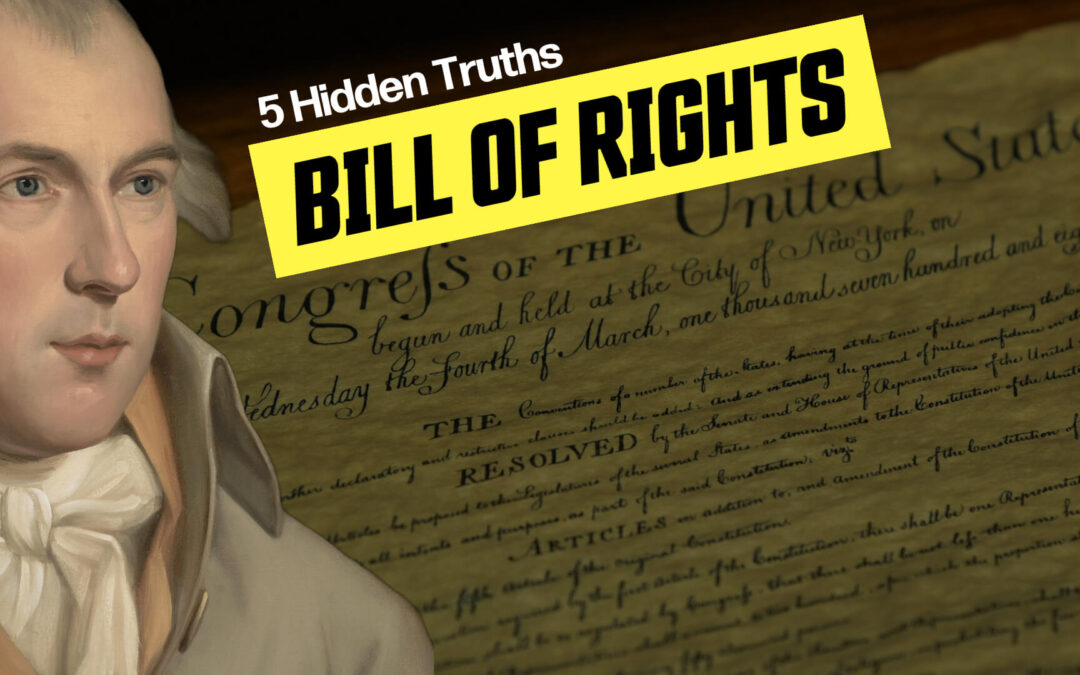
The states having at the time of their adopting the Constitution, expressed a desire, in order to prevent misconstruction or abuse of its powers, that further declaratory and restrictive clauses should be added…hence the Ten Amendments were added.

Ratification of the first Ten Amendment was dependent on states’ powers being protected.

Many of our founders felt it imperative that written assurance was provided which allowed people to self-govern at the lowest level possible being closer to local legislatures than they would ever be to their federal or general government.

By including the 10th Amendment those concerned with federal tyranny were calmed in their concern since anything the federal government attempted to legislate beyond the Constitutional limits of Congress authority would be classified usurpation of state sovereignty and Constitutionally illegal.

cross-posted from the Minnesota Tenth Amendment Center

Continue Reading

Betrayal of our Nation

Editor’s note: thank you to Dee Clark for supplying this clear and concise example letter for sending to press editors! (cross-posted from the Texas Tenth Amendment Center) Read on…

Dear Editor:

When our federal government forces an individual to participate in a healthcare program under which access to care, and decisions about treatment, are controlled by the government, it is infringing upon that person’s “inalienable rights” – taking control of his/her Life, limiting his/her Liberty, and restricting his/her Pursuit of Happiness. That is a direct violation of the Bill of Rights, which was written to prevent that very infringement.

In addition, the Constitution states that all powers not specifically given to the federal government remain in the hands of the People, and the States. No part of the Constitution specifically give the federal government the power to control healthcare, so the current administration is over-stepping the limits of its Constitutional authority.

Our Founders worded the Constitution so that it could be understood by all Americans. Since the current administration is made up of well-educated people, I must assume that they do understand it – and that their violation of its constraints is deliberate.

And that is why Obama’s healthcare mandates must be opposed and nullified as quickly as possible. This is abetrayal of our nation – and our People – that cannot, and must not, be allowed to stand.

Continue Reading

A Day to Remember: Bill of Rights Day

lost-libertyby Harry Browne

This article was originally published on December 12, 2002. For more Harry Browne archives, visit www.harrybrowne.org

Dec. 15 should be a national holiday.

No, it’s not Earth Day, or Martin Luther King Day, or Flag Day, or Beat-Up-Some-Third-World-Country Day.

It’s Bill of Rights Day.

If there were to be only one holiday in America, that should be it. Contrary to all the blather we here about the unique goodness of the American people or our religious heritage or anything else, the one thing that set this country apart from all others was the Bill of Rights.

This was the first country in history to have a national government that was truly limited. No, the limits weren’t always observed, but for a century they held the federal government more in check than any government in history. At the end of the 19th century, federal, state and local taxes still took only 8 percent of the national income (it’s 48 percent today).

Children know nothing of their heritage

Unfortunately, our children grow up with no concept of limited government. All they learn in school is that the government is the wondrous savior that brought us out of the Great Depression, made the world safe for democracy, holds human greed in check, and stops rapacious corporations from polluting the environment.

They don’t understand that the one unique factor government possesses is force, and that only a strict Constitution can keep that force from getting out of hand. When they study the Constitution, they pore over tedious sections explaining the makeup of the Senate and the House, how judges are selected, and how federal laws are enacted. Needless to say, they aren’t taught the concept and virtue of limited government.

The meaning of the Constitution

And so they don’t understand that the Bill of Rights is the heart of the Constitution – the section that gives meaning to it by holding the government in check. Those 10 amendments say:

  • The government can’t restrict what you say, what you write, what you protest, or what you believe.
  • The government has no authority to limit in any way your ability to defend yourself.
  • The military can’t force you to allow soldiers to stay in your home.
  • No one has the right to search your person or your property without a warrant signed by a judge affirming that there is good reason to believe your belongings are involved in a crime.
  • No policeman or prosecutor can force you to say anything, you can’t be tried again for a crime for which you’ve been acquitted, no one can take your property without due process of law, and the government can’t use your property without paying for it.
  • You can’t be held in jail without being brought to trial or without knowing the charges against you, you can’t be deprived of an attorney, and you have a right to confront anyone who gives evidence against you.
  • You have a right to be tried by a jury of your peers.
  • You can’t be subject to excessive bail requirements, be tortured or receive cruel punishment.
  • The listing of these rights doesn’t mean you have forfeited any other rights, unless those rights are specifically abrogated within the Constitution.
  • Most important of all, the federal government has no authority to do anything that isn’t specifically mentioned in Article 1, Section 8 of the Constitution, which spells out the areas in which Congress is allowed to legislate.

The Constitution isn’t written in Chinese, Swahili or Sanskrit. It’s in plain English. And the first question a president should ask any potential Supreme Court judge is, “Can you read?”

If the judges could read and pay attention to what they read:

  • We wouldn’t have national medical programs – and health care would be far less expensive, far more efficient, and far more user-friendly.
  • The federal government would have no role in education, and our children would at least have a chance to learn something significant in school.
  • None of your money would be sent to foreign dictators.
  • The president would have no authority to make war without a specific declaration of war by Congress – and thus there would have been no U.S. invasions of Iraq, Panama, Grenada, Serbia or Afghanistan – and tens of millions of foreigners might not hate us so much.
  • There would be no need for an income tax, because the cost of the federal government would be – at most – a third of what it is now.
  • And many more benefits would flow to us.

Bring back America

The Bill of Rights isn’t some legalistic fine print. It was written to make our lives freer, more prosperous, and happier. By forsaking it, America has become no better than any other country in the world.

browne-why-governmentToday every conceivable subject is fair game for legislation to enforce the personal whims of people like Bill Clinton, George Bush and those 535 drunken sailors in Washington.

No, we won’t have a national celebration this Bill of Rights Day. But we can privately contemplate what we’ve lost – and vow to restore the America that was meant to be.

Harry Browne (RIP 1933-2006), the author of Why Government Doesn’t Work and many other books, was the Libertarian Party presidential candidate in 1996 and 2000, a co-founder of DownsizeDC, and the Director of Public Policy for the American Liberty Foundation. See his website.

Continue Reading

The Vision of the Founders: Dead and Gone

by Kevin R.C. Gutzman

Editor’s Note: Bill of Rights Day is Tuesday, December 15th. But as Kevin Gutzman points out in this article, it’s not a day of celebration. Instead, it should be a day of mourning for the death of decentralized self-government.

pcg-constitutionIn 2008, the Supreme Court of the United States decided Kennedy v. Louisiana. In that decision, the Court created a new categorical right to rape a child without receiving the death penalty.

Although the majority made mention of the Eighth Amendment’s prohibition of “cruel and unusual punishment,” no one really believed that this new right had any basis in the Constitution. The Court majority claimed that its decision reflected a new societal consensus, despite the fact that six states and, as it turned out, Congress recently had adopted legislation providing capital punishment for certain child rapists. The dissenting justices said that the actual basis of the Kennedy decision was “the Court’s ‘own judgment’ regarding ‘the acceptability of the death penalty,’” but the majority opinion made clear that the Court simply differed with the people’s representatives on the question how significant rape of a child is.

In other words, the justices substituted their legislative will for that of elected legislators. Alas, there was nothing unusual about this. Kennedy v. Louisiana illustrates what has come of the Bill of Rights in our day.

The Bill of Rights should be mourned, not celebrated. It is defunct. Intended as the bulwark of the right of decentralized self-government, it now serves mainly as an excuse for the opposite: a roving judicial veto of state policies that federal judges dislike.

So, if the people of virtually every state ban flag burning or regulate abortion, provide capital punishment or support prayer in school, that does not settle the matter. Unlike 200 or 100 years ago, today the federal judiciary is apt to step in to stop state legislatures from adopting policies like this.

The people never consented to have the federal judges behave this way.

virginias-american-revolutionThe purpose of the first ten amendments was laid out clearly by their Preamble. “Preamble?” You might ask. “What preamble?” Although the main body of the Constitution is never published without its Preamble, one could study American history for a lifetime without ever encountering the Preamble to the Bill of Rights.

That Preamble says that Congress is recommending amendments to the states because a number of states in ratifying the Constitution “expressed a desire, in order to prevent misconstruction or abuse of its powers, that further declaratory and restrictive clauses should be added.” Since the people were afraid of the new Federal Government, that is, the Bill of Rights was being added to hedge in the powers of the Federal Government more carefully.

So, for example, the Tenth Amendment stated what Thomas Jefferson called the underlying principle of the entire Constitution: “The powers not delegated to the United States by the Constitution, nor prohibited by it to the States, are reserved to the states respectively, or to the people.” In other words, the Constitution gave the Federal Government a few enumerated powers, and those were all.

That is why the First Amendment begins by saying that, “Congress shall make no law.” Congress, not government generally. The point was to leave such questions in the hands of elected state legislators.

America’s Revolution was fought and won in the name of self-government via elections to state legislatures. King George III and Parliament insisted that those legislatures could legislate only when and as far-off officials essentially unaccountable to American colonists said they could. The Americans rejected that idea. In fact, rejecting that idea was what made Britain’s North American colonists into Americans.

No surprise, then, that six years after the Revolution ended, in the First Congress, the people insisted that the principle of local self-government — of federalism — be made explicit through the Tenth Amendment and the other nine. They wanted explicit statements that the distant new Congress could not violate Americans’ most cherished rights — rights the king and Parliament had repeatedly infringed.

This was an uncontroversial understanding of things in the Constitution’s first century and more. The Supreme Court unanimously said in 1833 and thereafter that the Bill of Rights was a limitation solely on the Federal Government.

killed-the-constitutionBut the 20th century saw a great change. The Progressives of the early part of the century opposed constitutional limitations on government power generally, and the New Deal of the 1930s stood for the elimination of the Tenth Amendment from constitutional law. Congress’s power is essentially unlimited today, and federal courts have come to supervise virtually all state policies — essentially on the basis of federal judges’ policy preferences.

No one today even pretends that the Bill of Rights serves its intended purpose of restraining the Federal Government. Quite the opposite. And the death of decentralized, election-based government is entirely lamentable.

Kevin R. C. Gutzman, J.D., Ph.D., Associate Professor of History at Western Connecticut State University, is the author of Virginia’s American Revolution: From Dominion to Republic, 1776–1840 and The Politically Incorrect Guide to the Constitution. He is also the co-author, with Thomas E. Woods, Jr., of Who Killed the Constitution? The Fate of American Liberty from World War I to Barack Obama. His upcoming book, James Madison and the Making of America, will be published by St. Martin’s early in 2011.

Continue Reading


Preamble to the Bill of Rights

“The conventions of a number of the States having at the time of their adopting the Constitution, expressed a desire, in order to prevent misconstruction or abuse of its powers, that further declaratory and restrictive clauses should be added: And as extending the ground of public confidence in the Government, will best insure the beneficent ends of its institution.”

Enough said.

Continue Reading